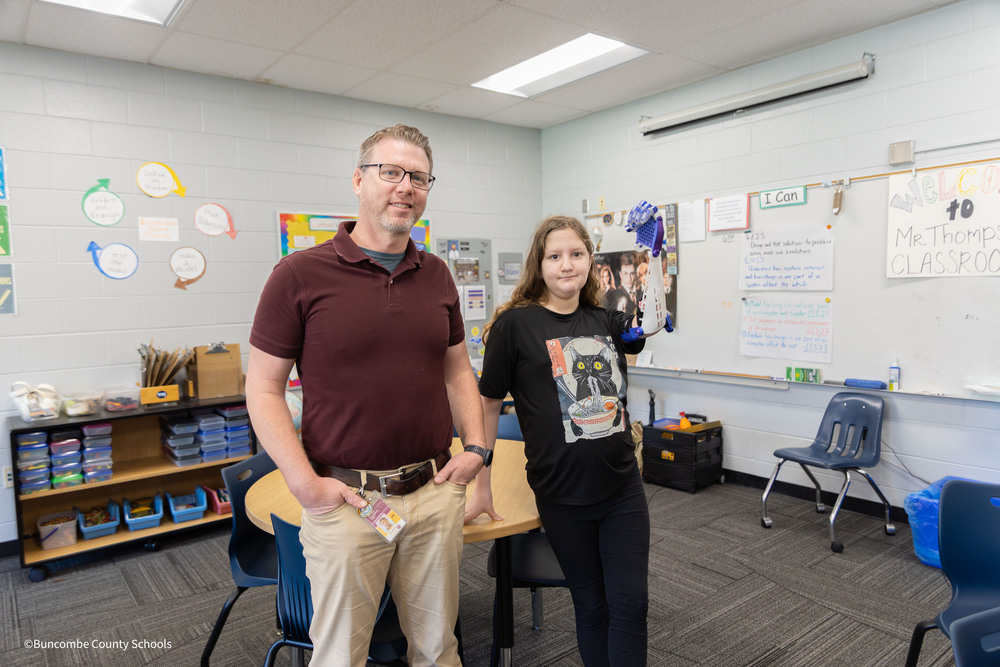
At North Windy Ridge Intermediate School, STEM teacher Russell Thompson is helping students learn about science, engineering and compassion, one 3D-printed prosthetic arm at a time.
For years, Thompson has taught lessons about the systems of the human body by guiding students through hands-on projects building prosthetic arms out of cardboard. During those lessons, he often showed videos of real prosthetics to help students better understand how the devices work and how engineering can improve lives.
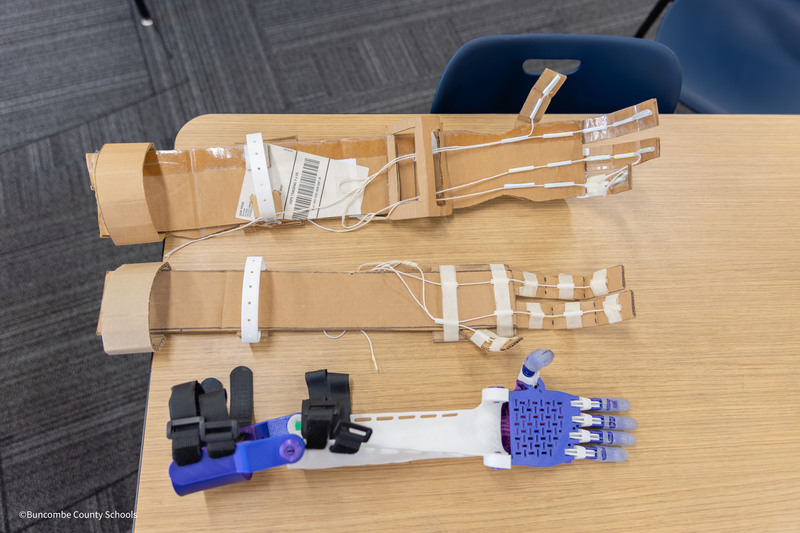
One video from the nonprofit organization E-Nable inspired Thompson to think even bigger. The video featured a 3D-printed prosthetic arm, planting the idea that he could someday create one himself for a child in need.
That opportunity became possible after North Windy Ridge Intermediate purchased a new 3D printer using PTO funding.
“I realized this could be something that could truly help kids in our community,” Thompson said.
The first student to receive one of Thompson’s custom 3D-printed prosthetic arms was one of his own fifth grade STEM students who was born with a limb difference.
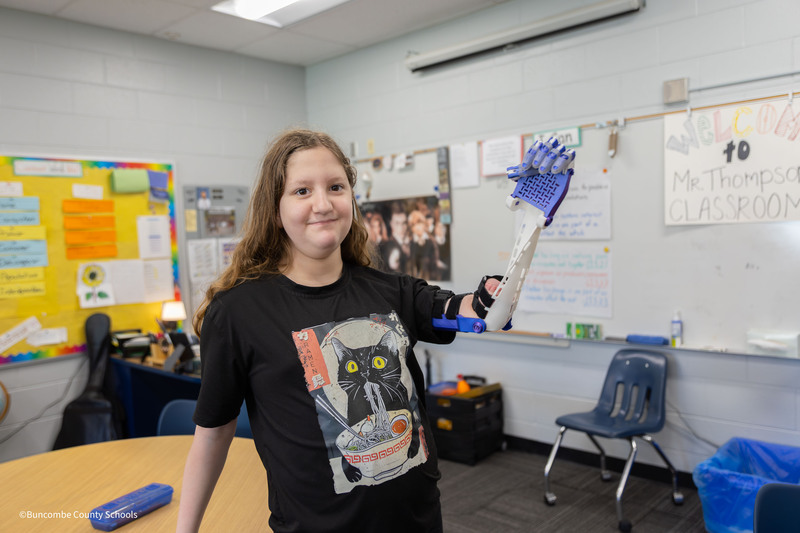
Thompson said many children with limb differences do not qualify for traditional prosthetics through insurance because they are still growing, making replacement devices expensive and difficult for families to obtain. He hopes to provide the 3D-printed prosthetics to families at no cost, giving students access to devices they may not otherwise receive.
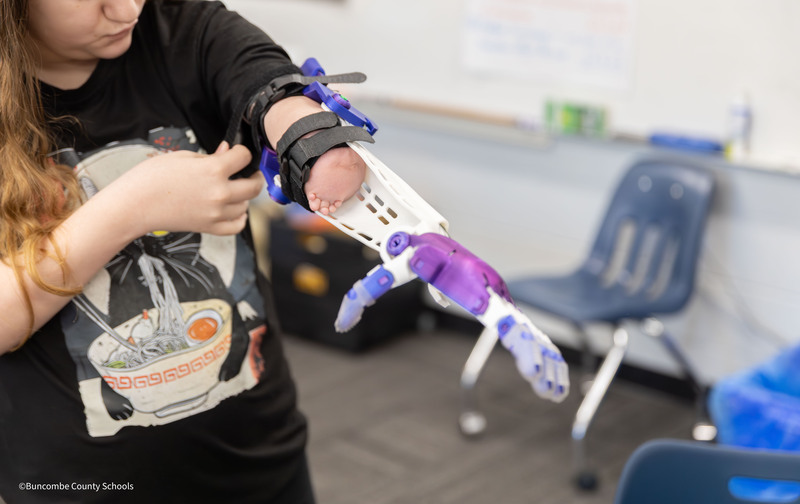
The prosthetics are designed for students with limb differences from the elbow down or for those who have wrists. Thompson said each prosthetic can also be completely customized with colors chosen by the student, helping make the device both functional and personal.
The prosthetic arm takes approximately 10 hours to print and another 12 hours to assemble, customize, and fit to the student. The device is designed so the fingers move when the user retracts their elbow, allowing students to grip and hold objects.
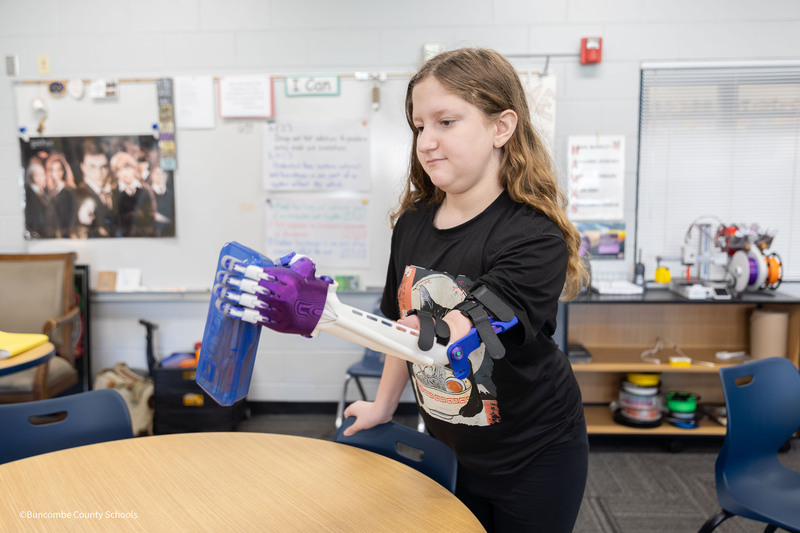
Thompson said the prosthetics can also serve as an important stepping stone for children who may later receive a more permanent medical prosthetic. By introducing students to wearing and using a prosthetic at a young age, they can become more comfortable and confident adapting to the device over time.
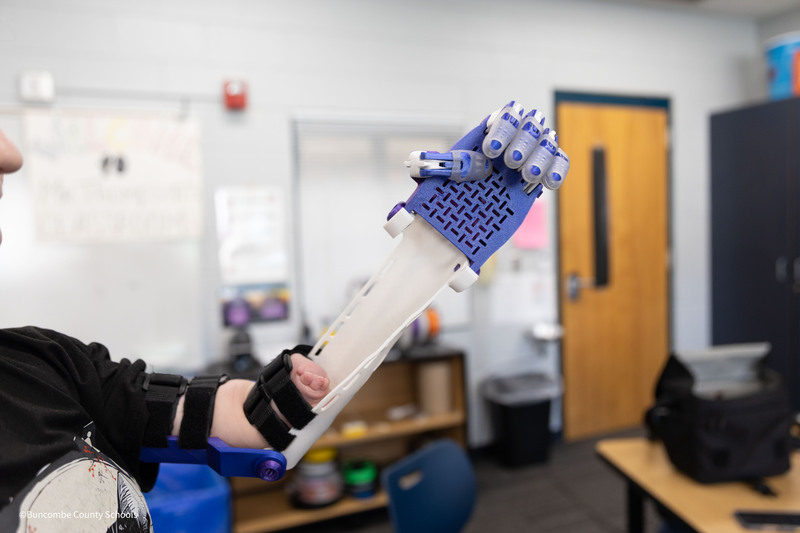
For Thompson, the project combines engineering, problem-solving and empathy, lessons he hopes his students carry with them long after they leave his classroom.
He said his goal is to continue expanding the effort and help more children with limb differences throughout Western North Carolina.